

Since 2017, Oleodinamica Gambini has established a fully equipped in-house laboratory for the production of hydraulic manifold blocks and hydraulic power units.
Since 2017, Oleodinamica Gambini has established a fully equipped in-house laboratory for the production of hydraulic manifold blocks and hydraulic power units
Ingenious thinking and a strong commitment to investment and improvement were decisive in the decision to develop our own product line, leading in 2017 to the creation of a fully equipped laboratory with the most advanced machining technologies.
This was the missing element that enabled the company to respond more effectively to the specific requirements of an increasingly demanding customer base.
Today, Oleodinamica Gambini designs and manufactures high-performance hydraulic manifold blocks and hydraulic power units, supported by a rigorous testing laboratory that ensures complete reliability and full confidence in the final product delivered.
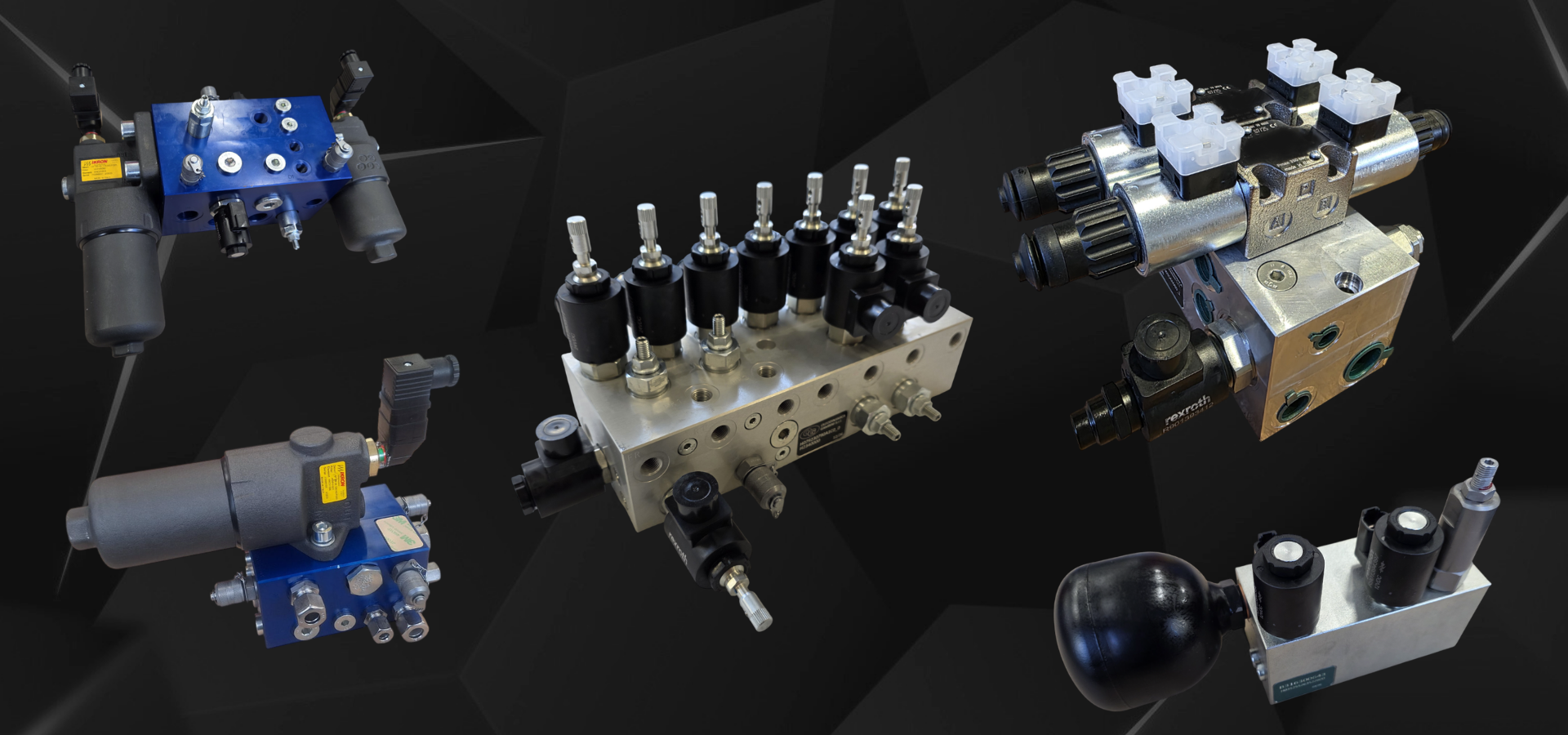
Hydraulic manifold block manufacturing process:
Our production process is structured as follows:

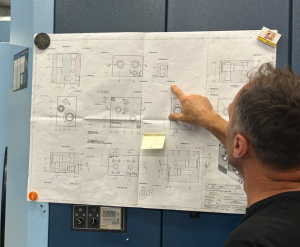
Design and Engineering
Our technical department works closely with the customer to define the required specifications and develop the hydraulic circuit to be manufactured, integrating valves, cartridge valves and accessories while also proposing improvements to enhance performance and reduce overall size.
A 2D drawing and a 3D model are then created, on which simulations are performed to ensure the circuit is suitable, free from interference and without issues that could cause pressure drops.
Once the customer’s approval has been obtained, the process moves on to the production phase.

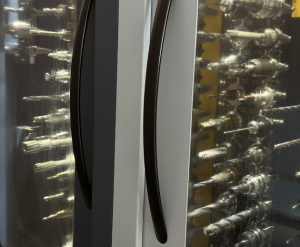
Mechanical Machining (CNC)
At Oleodinamica Gambini, we machine aluminium, aluminium alloys (Ergal) and steel. Materials are supplied by certified vendors as pre-cut semi-finished parts, ready to be loaded into our machining centres.
We operate three state-of-the-art Matsuura machining centres with multi-pallet technology and a 300-tool rack, fully integrated with our IT systems to ensure highly customised production.
The manifold blocks are machined according to the technical drawings, creating valve pockets, connecting drillings, orifices and internal channels, with tolerances guaranteed down to one tenth of a millimetre.
Oleodinamica Gambini is also strongly committed to sustainability, with a focus on managing machining waste from aluminium and steel. Dedicated compactors installed at the end of each production line reduce chip volume by up to 80%, while up to 90% of cutting fluids are recovered and reused.

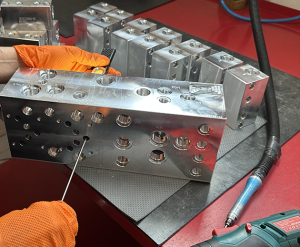
Finishing, Cleaning and Surface Treatments
Once machining operations are completed, each manufactured block undergoes a manual deburring process to remove all internal and external burrs generated during machining, carried out one by one.
The component is then subjected to high-temperature ultrasonic washing using specific solvents or detergents to eliminate any trace of chips or cutting fluids. This stage is critical, as any contamination or metallic residue inside the circuit could cause valve malfunctions during operation.
Finally, depending on the application and customer requirements, the part can undergo anodising or zinc plating, carried out by long-standing qualified external partners. Alternatively, components can be painted in-house according to the required RAL colour using our internal painting system.

Assembly and Installation
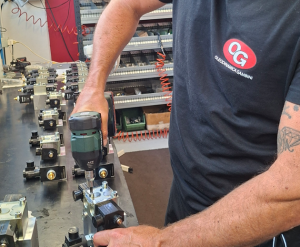
Valves, cartridge valves, plugs, O-rings, anti-extrusion rings and any additional accessories (accumulators, pressure switches, pressure gauges, etc.) are assembled, strictly observing all specified tightening torques using torque wrenches, in order to prevent deformation of the housings and ensure perfect sealing.

Testing and Inspection
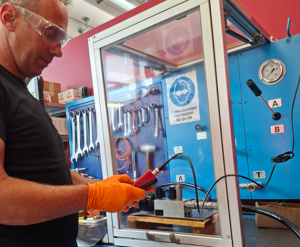
Each manifold block is tested on a dedicated test bench by connecting it to a hydraulic power unit. The component is pressurised with oil to check for any internal or external leakage, and any pressure relief or regulating valves are adjusted according to the required settings.
Finally, a label or nameplate is applied, providing full traceability data for the finished product.
Hydraulic Power Unit Manufacturing Process:
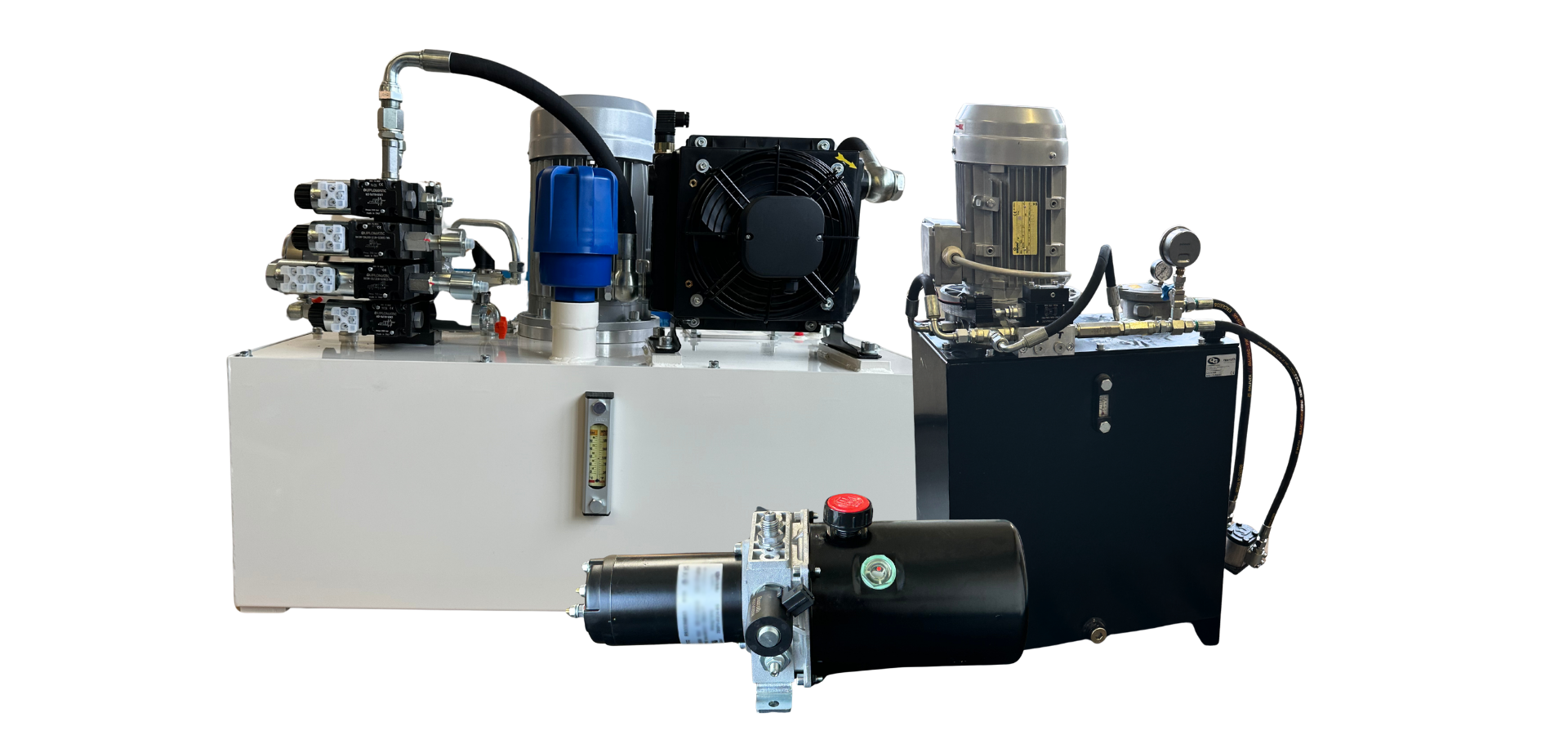
From design to final testing: every hydraulic power unit manufactured by Oleodinamica Gambini is the result of a structured production process that combines engineering expertise, manufacturing quality and rigorous functional testing.
The entire production cycle is managed in-house to ensure maximum product reliability and full compliance with customer requirements.
Design and Bill of Materials Definition
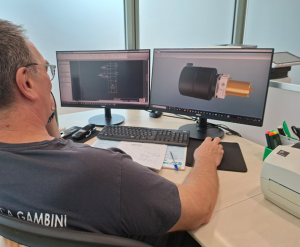
The process begins in our engineering department, where the hydraulic power unit is designed and the corresponding Bill of Materials (BOM) is created.
Each configuration is developed according to the customer’s specific requirements, with every component carefully selected and defined to ensure the correct assembly and performance of the hydraulic power unit.
Manufacturing and Assembly
Once the order has been confirmed, the technical documentation and Bill of Materials are transferred to the production department, where all components required for assembly are prepared.
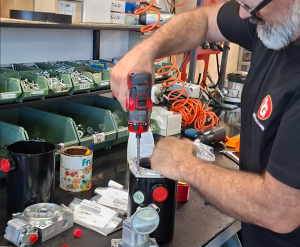
The first operational stage involves assembling the manifold, electric motor and gear pump. This operation forms the core of the hydraulic power unit and requires particular care to ensure proper alignment and reliable system performance.
The tank is then assembled, with seals and O-rings installed to guarantee the integrity and leak-tightness of the hydraulic circuit.
Depending on the project configuration, the following components may also be installed:
- Hydraulic cartridge valves integrated into the manifold;
- Manifold blocks flanged to the main manifold;
- CETOP valves;
- Directional valves and other control components.
Each component is assembled according to the relevant technical specifications and undergoes dimensional and assembly checks throughout the process.
Leak Testing and Functional Testing
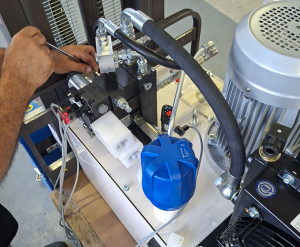
Once assembly is complete, the hydraulic power unit is filled with hydraulic oil. The system is then monitored for a specified period of time to verify the absence of leaks, particularly at welded joints and sealing points throughout the hydraulic circuit.
Each hydraulic power unit subsequently undergoes functional testing on a dedicated test bench. During this phase, the correct operation of the motor-pump assembly, the response of the valves, and the performance parameters specified in the design are thoroughly verified.
This testing process ensures that the unit fully complies with all technical requirements before being released for delivery to the customer.
Test Report and Delivery
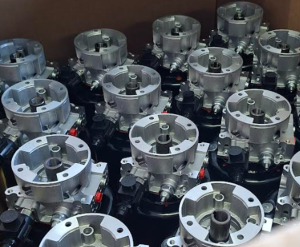
Upon completion of all inspections and tests, a test report is issued, documenting the results of the verification procedures carried out.
The hydraulic power unit is then prepared for shipment, carefully packaged and made ready for delivery to the customer.
Customization often means achieving better performance.
We design and manufacture hydraulic manifold blocks and hydraulic power units tailored to our customers’ specifications.